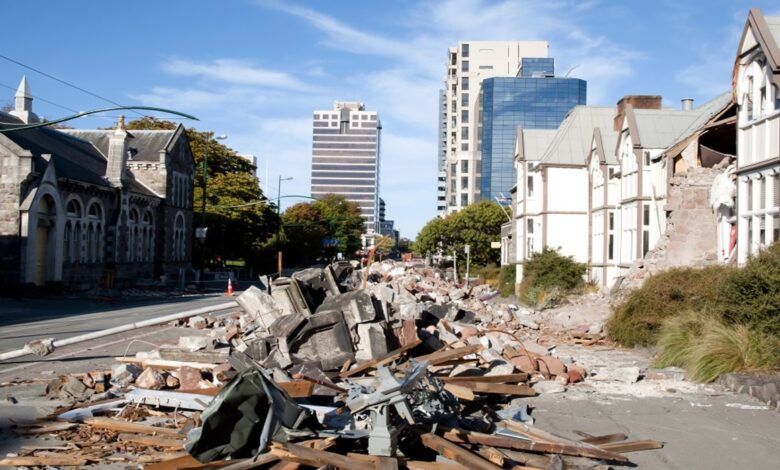
Earthquakes can strike with little or no significant warning, making them top among the most difficult natural disasters to predict. Scientists can however identify areas with elevated long-term earthquake risk, but there is no reliable method to predict when a major earthquake will happen.
Still, researchers monitor several types of seismic and geological activity that can occur before or around major earthquakes. Here are 5 of the most discussed indicators.
1. A sudden increase in small earthquakes
Cluster of earthquakes occurring within a small area can attract the attention of seismologists. These sequences are sometimes called earthquake swarms. However, increased seismic activity does not automatically mean a larger earthquake is coming.
2. Unusual animal behaviour
Stories of animals behaving weirdly before earthquakes have existed for centuries. Researchers have documented some cases, but there is no steady nor consistent pattern that can be used to forecast an earthquake.
Animals can sometimes respond to the initial waves of an earthquake seconds before humans notice the shaking, which can create the impression that they predicted the event.
3. A moderate earthquake followed by tremors
An earthquake that happens before a larger event may also later be classified as a foreshock. The problem is that scientists cannot know whether an earthquake is a foreshock until a bigger earthquake occurs.
4. Changes detected around active faults
Scientists monitor faults for changes in seismic activity and other conditions. Research has examined phenomena including ground movement, groundwater changes, gas emissions and electromagnetic signals.
None, however, has been demonstrated to provide a dependable short-term earthquake prediction.
5. Official seismic hazard warnings
Perhaps the most useful “warning” is not the physical signs at all. Scientists use historical earthquake records, fault and seismic monitoring to determine which areas face higher long-term risks.
For residents and tourists staying in earthquake-prone regions, official alerts and earthquake early-warning systems are far more dependable than rumours about weather, animals or other supposed predictors.