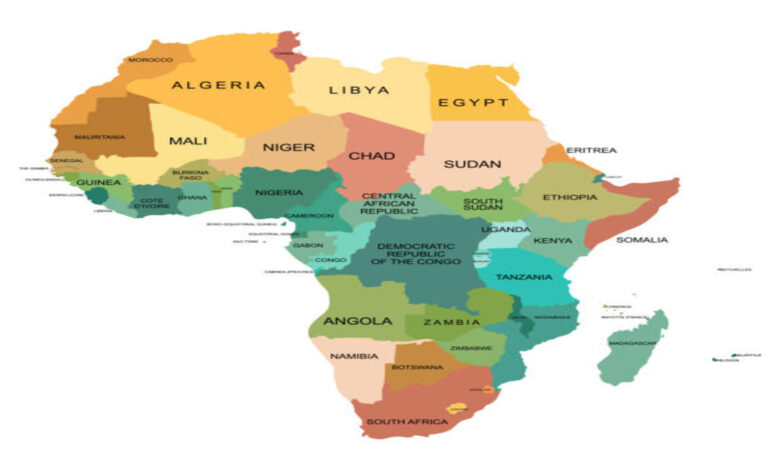
Africa’s economic landscape is changing, with shifts in exchange rates, commodity markets and domestic production affecting the size of national economies. According to the International Monetary Fund’s October 2026 projections, South Africa is Africa’s largest economy, followed by Egypt and Nigeria. Here are the continent’s 10 biggest economies ranked by nominal gross domestic product (GDP).
Top 10 Biggest Economies in Africa in 2026
| Rank | Country | Projected GDP |
|---|---|---|
| 1 | South Africa | $489.1 billion |
| 2 | Egypt | $442.9 billion |
| 3 | Nigeria | $386.7 billion |
| 4 | Algeria | $331.9 billion |
| 5 | Morocco | $195.6 billion |
| 6 | Angola | $157.3 billion |
| 7 | Kenya | $151.2 billion |
| 8 | Ghana | $128.6 billion |
| 9 | Ethiopia | $127.1 billion |
| 10 | Democratic Republic of the Congo | $122.3 billion |
Source: IMF October 2026 World Economic Outlook estimates, as reported by Worldometer. Figures are projected nominal GDP in current US dollars and rounded to one decimal place.
South Africa leads the ranking with an economy supported by financial services, mining, and retail. Egypt follows with an economy spanning manufacturing, tourism, construction and other services. Nigeria, despite its large population, oil and gas industry, agriculture and extensive services sector, ranks third in dollar-denominated GDP. Exchange-rate movements have played a major role in recent changes to its position.
These rankings measure the total value of goods and services produced, not the average income or living standard of citizens. Nominal GDP is also affected by exchange rates, meaning a country can move up or down the list without experiencing an equivalent change in its actual economic output. The 2026 figures remain projections and may change as more economic data becomes available.